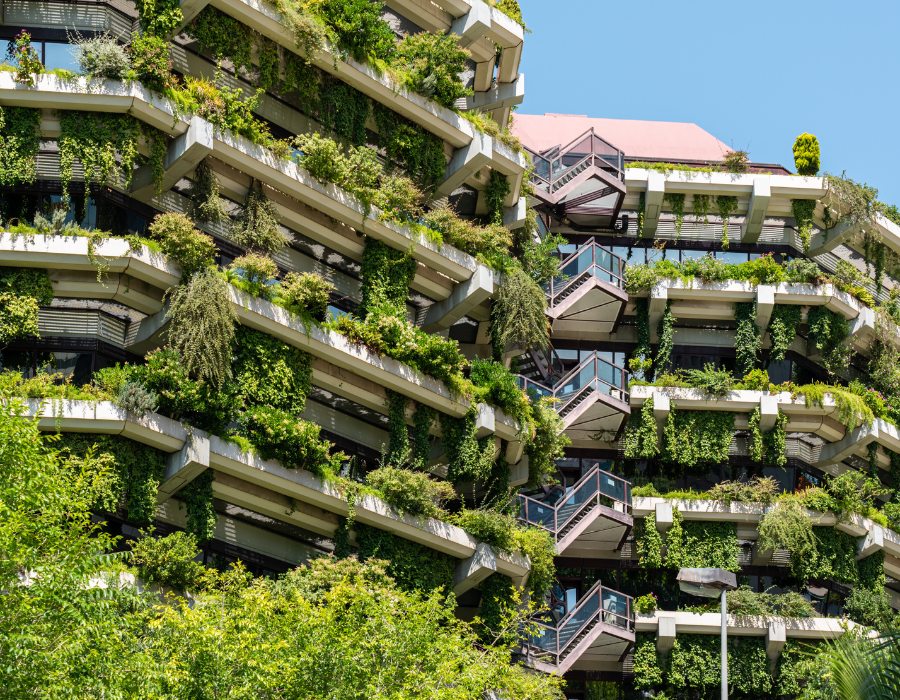
As cities across Europe face rising temperatures, increasing flood risks and a growing pressure on urban infrastructure, nature-based solutions are becoming essential to resilience. These themes were recently explored in an interview published by Grist, a public service media focused on climate, sustainability and environmental justice.
The interview featured two authors of the report “Implementing green roofs and walls: Lessons from European experience”. In turn, this output is the culmination of a knowledge request by the European Commission, specifically its Directorate-General for Environment (DG-ENV) and the Knowledge Centre for Biodiversity (KCBD). The Science Service for Biodiversity (SSBD) that BioAgora is building up was the recipient of the inquiry, assembling a panel of researchers and experts via its Nature-based solutions Knowledge Exchange Network to contribute scientific evidence and know-how to the report.
Vera Enzi-Zechner (European Federation of Green Roof and Living Wall Associations) and Maria Manso (Lusófona University) were the co-lead report authors whom Grist approached. They placed an emphasis on how green roofs, living walls and rooftop agrivoltaics can help support biodiversity, reduce urban heat, absorb stormwater and generate renewable energy. Their conclusions were based on the report's relevant case studies from across diverse European contexts.
Ultimately, the interview established a link between such practical solutions and broader European biodiversity and restoration goals as the importance of integrating nature-based solutions into long-term planning and policy was stressed. Such a vision inevitably requires a steady intake of scientific knowledge to support the implementation of the EU Nature Restoration Regulation (NRR) and the European Biodiversity Strategy for 2030. As the response to the request demonstrates, the SSBD is well placed to facilitate this crucial dialogue between research and governance.
The full interview can be accessed here. You can also find out more about the complete report and the Science Service.