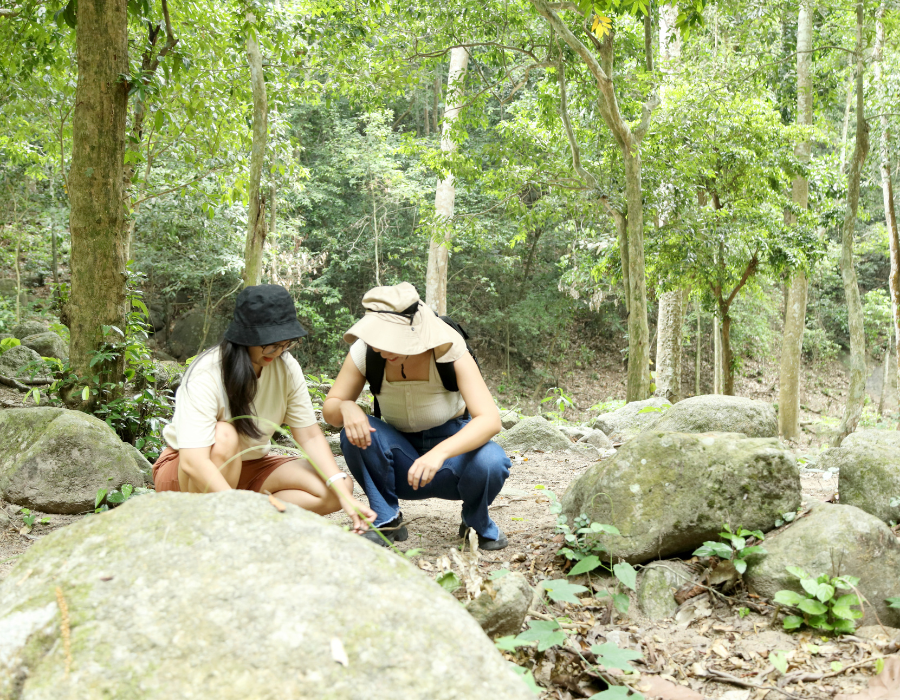
April marks Citizen Science Month, highlighting its important role in understanding and addressing complex public policy challenges, including those related to environmental sustainability and biodiversity frameworks. It yields the opportunity to emphasise how interdisciplinary methodologies can strengthen the connection between science, policy and society.
Citizen science is well integrated into BioAgora and its core idea, creating a Science Service for Biodiversity (SSBD) that effectively bridges the gap between research and governance. Rather than simply facilitating access to science, BioAgora builds a carefully structured and sustainable interface that enables transparent policy-relevant knowledge exchange across European, national and local levels. This process includes mechanisms for knowledge synthesis, expert consultation and stakeholder engagement, advocating for evidence-based decision-making aligned with the European Biodiversity Strategy for 2030.
Within the project’s framework, citizen science is viewed as a strategic knowledge contributor rather than merely a data source. It facilitates the collection of contextually relevant biodiversity expertise with active citizen involvement in the scientific process. Consequently, this approach strengthens transparency, inclusiveness and societal partnership in environmental decision-making.
On the whole, citizen science and its presence in decision-making are still not yet fully established. To tackle this gap, BioAgora, in collaboration with the European Citizen Science Association, a member of the project consortium, works to embed citizen science into biodiversity decision-making by identifying key barriers and enabling factors within governance levels to deliver actionable recommendations for strengthening policy coherence.
This endeavour showcases that, as the Science Service is being developed further, BioAgora’s approach moves beyond collecting research-relevant insight. It now also focuses on co-production, ensuring that citizen science is not treated as a supplementary input but as a validated, policy-relevant and quality-assured knowledge pillar. By integrating diverse information systems, be they scientific, societal or experience-based, the project contributes to building a more adaptive, inclusive and responsive science-policy interface, ultimately expanding Europe’s capacity to address biodiversity issues.